Page 2

Winch

The Australian ADF UL1700L version typically uses the Werner & Co winch. Name plate data interpretation: breaking force 21,404 kg and Tractive force 6403 kg. It is designed for 14mm steel cable.

Control knobs on the winch. My understanding of how they work:

  • Passenger side knob engages gearbox or allows free wheeling in order to drag cable out by hand. Pull out the knob to disengage winch. WARNING: I discovered that it is not suited as an emergency disconnect, because once the cable is under tension, you may/will not be able to pull it out.
  • Drivers side knob is a friction adjustment. Wind it in for friction to slow the drum when paying out cable by hand. Loosen when winding in the winch.

Note: I imagine it would not be helpful to have the friction knob wound in whilst operating the PTO drive.

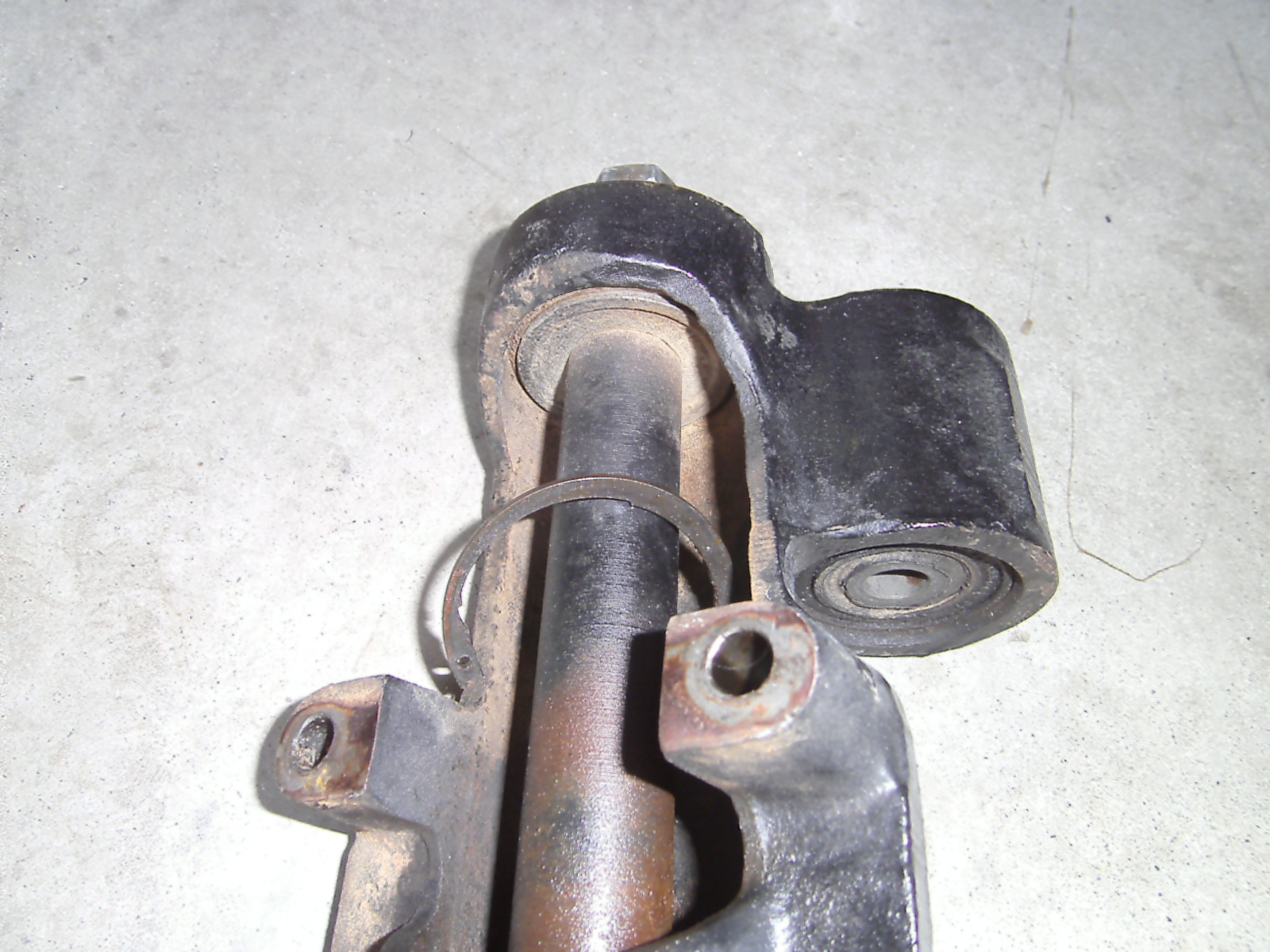
I found that it was best to remove the winch completely, to work on it. The winch is held on by 2 large pins (see photo below). The pins came out easily enough, but after about 30 odd years it was not so easy to remove the winch from the vehicle (needed a 6' digging bar to lever it off the pegs). 

Don't forget to check the winch gearbox oil.

Drive Chain

When I opened the drive chain case (on drivers side), about 1 litre of water came out. The inside surface and chain had some surface rust mixed in the grease (nothing of consequence however). A large 'O' ring is used to seal the side casing but obviously not intended to be a watertight seal on the rough casting. The chain operates a cable indexing slider to ensure cable winds evenly across drum. A gear puller is required to remove the large RH cog. After cleaning out, I painted the inside,  lithium sprayed the chain, applied sealant to the 'O' ring and installed a drain plug in the base of the case (as its likely to get more water in it over time).

Coupling

The connection between the rear of the winch and the vehicle PTO shaft, includes a torque overload clutch feature. The photo below shows the 4 ball bearings used in the overload clutch. I pulled it down as far as I could, cleaned it up, greased, repainted and resealed the cover. Note: They are supposed to be adjusted on a regular basis.

Bolts:

There are four M16 high tensile grade 10.9 main bolts holding the winch brackets in place. Unfortunately, as the front of the chassis box channel is open, all the dirt and crud in the world enters it, and when wet, the mud starts to corrode the bolts that are threaded into the hollowchassis. The risk with removing bolts that have lain undisturbed for eons, is that you can strip them or shear them off. I was convinced I had galled one of the M16 grade 10.9 bolts holding the winch brackets in place. I had to use a 1" drive, force multiplier to wind them out, as even a 1m long bar would not budge them. As shown in the first photo below, they were corroded and no longer fit for service. This is the likely typical condition of these bolts for all of these vehicles of similar age, and I consider it a mandatory check if the winch is going to see any service. Obtaining a replacement set of bolts should have been easy, but what do you know, I can only buy full boxes or buy from Mercedes. Seems grade 10.9 is rare here.

Some of the bolts securing the winch mount brackets are in good nick and can cleaned up with a brass wire brush, others, the threads are damaged beyond safe re-use. Note; in winding them out there was the risk of galling of the thread. Once out, I clean up the threaded holes by spraying with penetrating oil, ran a tap to clean up the corroded thread, sprayed with penetrating oil again and when refitting bolts, using anti-seize. Not a good idea to use bolts again where the thread is deformed, as it may stuff up the threaded anchor when refitting. The two structural bolts in the first photo have slightly damaged threads, the shanks are corroded and therefore need replacing. Make sure you replace with the right grade of bolt. Most are either 10.9 or 8.8 grade.

Rope 

I looked at 14mm steel cable versions (numerous constructions and materials). They are not cheap and have some disadvantages, such as: can be kinked, strands can stick out (severe injury risk), cannot be repaired in the field without special tools, expensive to get cleaned and can stretch and snap back (injury/death risk).

I looked at synthetic, i.e. Ultra High Modulus Polyethylene (UHMWPE). Dyneema is one of many well known brand names for UHMWPE. It is available pre-terminated or you splice an eye (soft or hard) on it yourself. Note: The open teardrop eye is designed for steel cable, whereas the closed donut eye is used for synthetic ropes. The reason: the teardrop open ends can cut away at the rope and fray it.

Grades: SK99 has 20% strength advantage over SK78 and crucially retains the same elongation and creep characteristics as SK78 – out-gunning SK90 on all levels!  SK99 has an unmatched strength to weight ratio. SK90 and 99 is expensive and as I am always looking for best value for money, I went for the middle of the price and performance range: SK78. However, if you expect to do lots of winching, one might wish to consider SK99? 

Advantages of UHMWPE:

  • Will float on water
  • Can be easily cleaned. 
  • Depending on the grade, it can be stronger than steel for the same diameter. 
  • Excellent fatigue resistance (cyclic bending).
  • Excellent  UV and chemical resistance.   
  • Good abrasion resistance.
  • Depending on grade, no snap back risk.
  • But most of all, Can be slice jointed and re-terminated in the field by hand

Negatives for UHMWPE: 

  • Exhibits creep, i.e. elongation over time.  Creep can often have a negative effect on a rope’s performance and strength when ropes are subjected to high loads for extended periods. 
  • Can melt at relatively low temperatures (140○C), so don't let the drum get too hot.
  • Susceptible to cuts, it’s not uncommon to have to smooth the drum or fairlead, will likely need an abrasion sleeve. I only have heatshrink, and that might have to do?

With synthetic rope; I recommend to clean it after each as soon as possible, check the drum temperature when in use (pour a little water on it if it starts getting too hot) and make sure that the rope is not exposed to UV whilst stored on the drum. This implies a cover over the winch.

Note: I purchased 30m of 14mm Dyneema but when it arrived, it is larger in diameter. Its more like 20mm when not under tension. I suspect it pulls down to 14mm under tension.  Also, whilst the 'eye' I purchased is for 14mm rope, it is slightly too small. I should have purchased an eye for 20mm rope. I spliced an eye at the end according to the internet instructions. Looked at quite a few internet sites and all basically saying the same thing. I then put 2 layers of heavy heatshrink over the splice and for the last 1m.

Installing synthetic rope for the first time:

I had someone take the tension on the cable, as I wound it in.

1st problem; the indexer is too slow for this fat rope, and started overlaying some of the layers. This is likely due to the Dyneema actually being thicker than 14mm (maybe 14mm when at maximum tension, but about 18mm when tensioned with only body weight. Managed to get it all on without serious problems.

2nd problem; I hooked the end of the rope up near the winch to keep it from flopping around. Started the winch to just take up the tension, jumped out the cab and just as I was needing to stop the winch, I found I could not pull the side disengagement knob out (even though I had tested it numerous times just beforehand). The winch kept going and the end of the cable tore off. Well, not quite, my splice pulled apart luckily.

Lessens learnt.

1) Synthetic rope is NOT suited to the Werner winch supplied with some ADF Unimogs. The winch drum is designed only for steel cable. The drum has guide flutes along it at the exact spacing and size of the 14mm cable. These will cut into the synthetic rope if the rope does not sit in each groove neatly. As the rope is thicker than the steel cable when not under tension, it will eventually ride up over the sharp edges of the flutes and eventually be damaged. It will also not lay onto the drum evenly as the indexer operates at a rate to suit the thinner steel cable. Good chance it will all bunch up at one end, potentially resulting in jamming.

2) This winch is not meant to be operated without someone at the controls inside the cab. I mistakenly thought that I could operate the winch from the side disengagement knob. It's not meant for that. Apparently once the cable is under some tension, the knob cannot be pulled out. Seems that at least 2 people are needed to operate the winch safely. One inside the cabin at the controls, and at least one outside checking that the cable is winding onto the drum evenly. Also ideally, have someone else to watch the overall winching activity.

I will now save the Dyneema for an extension rope. I have since bought the correct steel rope, 30 meters of 36 strand for flexibility (due to small diameter of drum). Had an eye swaged on one end and the other end braised to stop strands splaying. Maintenance manual recommends to be unwound and treated (grease) on a regular basis to prevent everything rusting up. I'm using Lanotec.

My cable weighs 26kg. To get it on to the drum: turn the drum by hand until the indexer is fully at the (passenger) side. There is a wedge shaped hole in the drum. Poke the cable through from the small side of the hole in the drum, drop in the wedge, tap the wedge down firmly (jamming the steel rope) and hope that the wedge will lock the cable in sufficiently for the cable to wind onto the drum properly. Mark the cable with paint at about 6 turns or more (limit of unwind).

Headlights

On opening the origional headlights, one headlight was well sealed, and in good condition, the other had a damaged housing and decades of crud had got in there and stuffed everything due to corrosion and melted wires etc. I would have liked to replace the headlights with a nice LED set, but they will cost ~US$800 and more. I evaluated many of the modern 90mm LED lights (most IP67 so not water proof). The IP69 military versions are very expensive but can, according to the datasheet, withstand 3m deep immersion continually. Some of the 90mm modules have separate high low beam modules and some have both in the same housing. These style are commonly used here on buses and progressively being used in many of the newer model cars. A mounting plate is required to adapt for them. The ECE (Economic Commission for Europe) regulation stamp means (in theory) that a lamp can be used in European countries and most industrialised ones outside of the EU (USA excluded) and provided the lights are designed for the correct driving side of the road. These ECE provisions and standards are meant to allow for products type approved by one country, to be used across Europe including Australia. 

General advice I have received is that, they need to be ECE approved and within the norms of the existing standards. The key take away, is that LED lights need to be self levelling (adaptive headlights). Adaptive headlights require sensors, computers and servos etc. 

After all this, I considered that its just too hard to comply with the very chaotic regulations with no conformity across the country. LED lights also emit a pure spectrum and its very difficult to equate colour and intensity to traditional incandescent light standards. The railways in NSW were amongst the first in the world to study (in conjunction with NSW University) and approve LED signal lights two decades ago. Whilst I spent many years helping set railway standards for LED lights, I am going to re-use my existing poor mans technology i.e. the original incandescent headlights. Its just easier to comply that way, even if I cannot take advantage of the better LED lighting technology available. Plus I don't want to pay the high costs for LEDs.

I ended up refurbishing the alloy casings painting inside and out, installing higher rated incandescent bulbsand replaced one of the Hella reflectors.

Painting the Cab

Interior

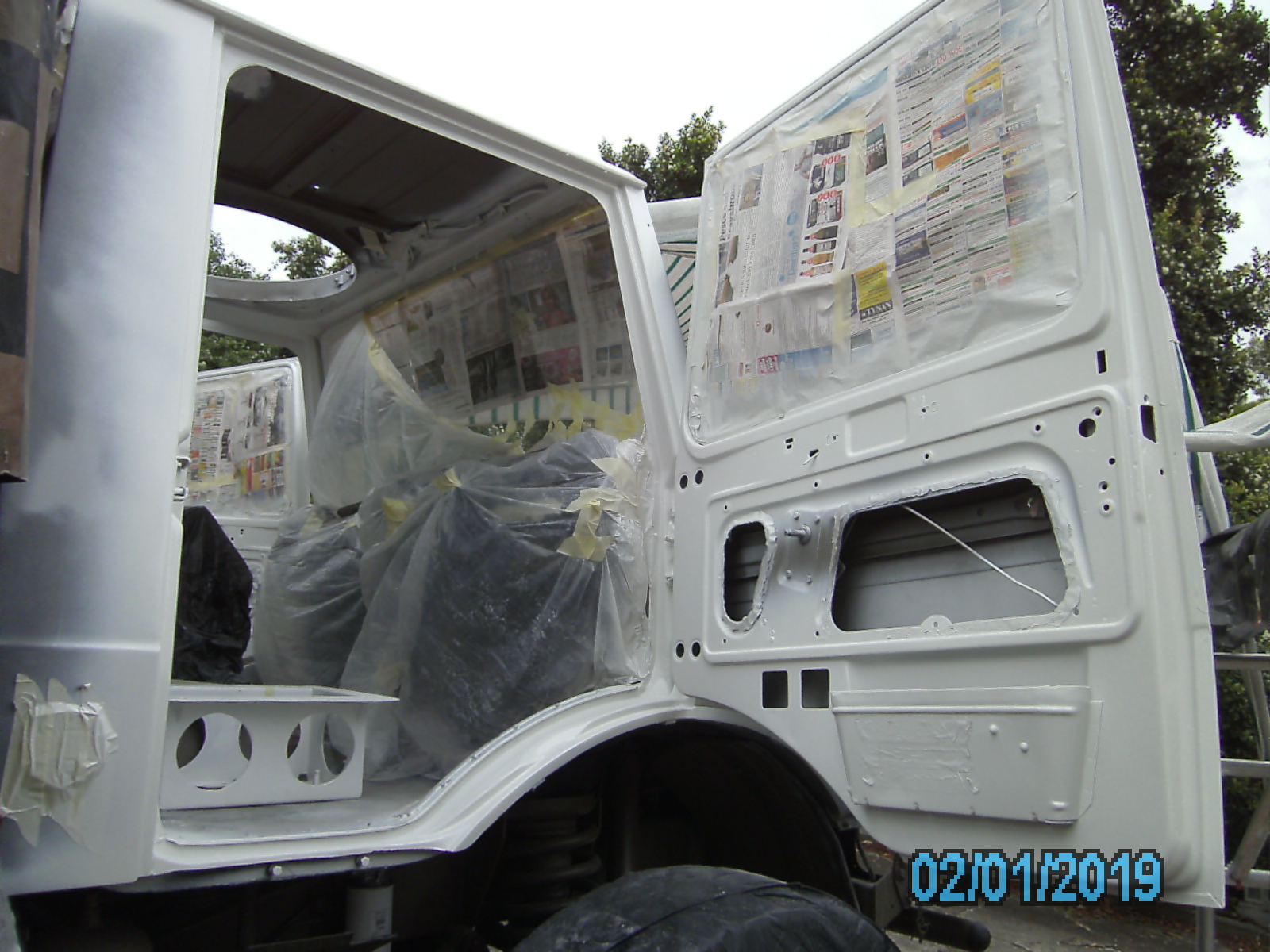
  • Cab had to be mostly stripped out to repaint. I've gone for Toyota French Vanilla White, as its commonly available. 
  • I'm leaving the dash in place, which means that behind the dash will remain drab green (but few will see it).
  • Inside door panels coated with rust proofing and sound proofing.
  • Underside  heavy coated with Crommelin water proofing pond sealer.
  • Rubber roof hatch seal is a bugger to re-install. I had to make up a special hook tool (see photo).

Exterior

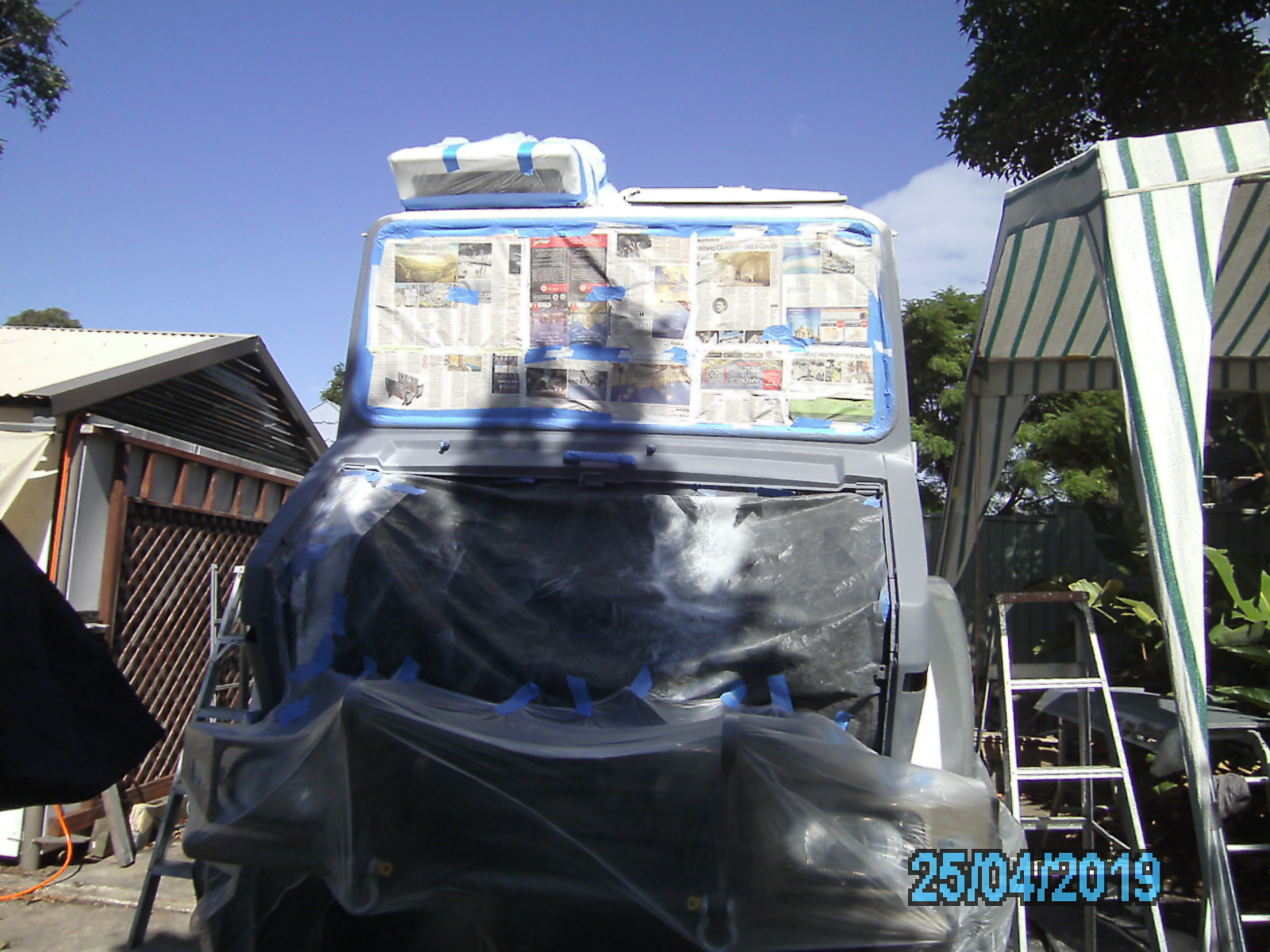
I bought and tried 4 sizes of spray gun before I realised that I simply will never make a good spray painter. Started painting the exterior over Easter break 2019. A difficult job outdoors in the wind. Sun and overnight condensation means that I have to keep replacing the masking tape in areas, as it tends to come away easily. One needs to lightly wet-sand down between coats due to grit etc blowing on to the wet paint. I ended up using a lot more paint this way also, as half of it blows away even when I wait between gusts to do a few seconds of spraying.  Use a small gun to get into the nooks and folds, as using a large gun can lead to more runs. Should have looked up air pressure before I started. I'm not very happy with the result. I assumed that my gravity feed gun ran at the same pressure as the vacuum ones. I ended up applying the first coat at twice the pressure it should have been. This resulted in narrow bands of orange peel finish. Used 4L for first coats. Waited a month and lightly sanded down and applied final coat using only about 20psi (instead of the wrong 45psi). 

I also found that if you leave masking tape in place for a few months or more, to bake in the sun, its almost impossible to remove. Some of it on the rubber around the windshield will not come off. Maybe over time it will degrade. Its been a few years now, and its baked on as strong as ever.

24-7-19 lowered the cab, fitted batteries under the bonnet (one above the other), tested the grill and bonnet for clearance (only a few mm clearance). Battery is almost up against the air cleaner . I don't expect to replace the engine air filter very often and to mitigate against this risk, I have fitted a pre-filter to the snorkel to remove most of the dust. These however, only tend to work well when the vehicle is driving at speed and work well when in bull dust.

Interior Furnishings

The roof lining had to come out. It was water damaged and the particle board support system was all buckled. It had to come out anyway, to paint, to check roof light wiring, to run camera monitor cable, to fit sound and heat proofing membranes and to fit air conditioner on roof. I had to replace one particle board panel, use  tape and resin to repair broken sections and used large head rivets to replace the rivets that had pulled through. It was in a terrible mess. Now at the upholsterers being re-covered.

Original seat belts were sent off to a Melbourne company to be re-terminated and parts replaced.

Lining door boards, door arm rests, sun visors, handles etc all re-stained black, so as to look new.

Sound Insulation

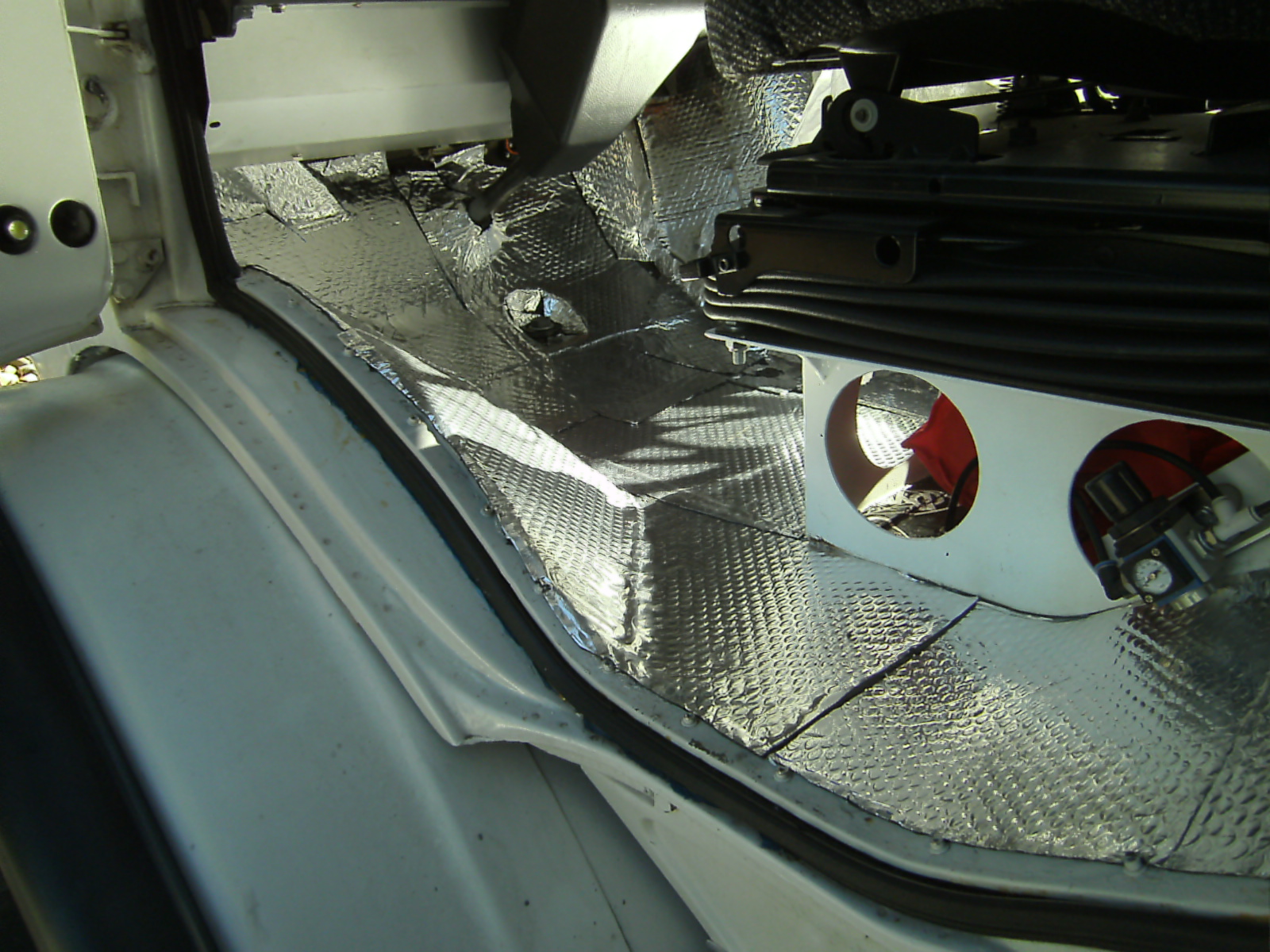
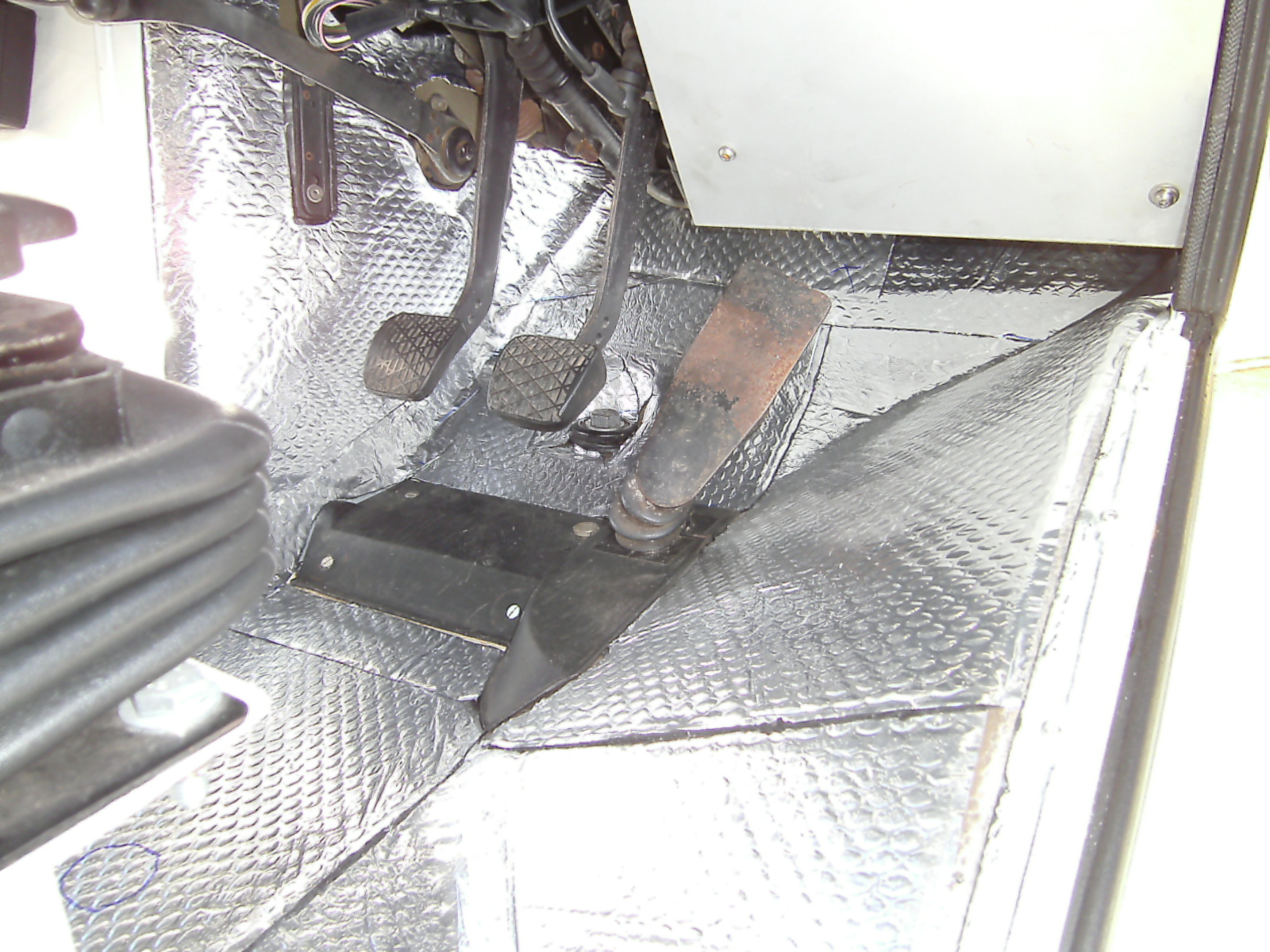
June 2021, got around to starting to install some sound proofing. So far, have installed only the butyl rubber sheets that have silver backing. The thick mass rubber sheeting is too thick at about 1/2 " and will take a lot of work to try and fix it down properly, if at all possible? In fact, I'm likely not to bother as its impracticably too thick to install. Lesson Learnt: Go for a thinner product, especially if carpet is to go over the top.

Cab Fan

Started to dismantle the cab air blower system ducting under the bonnet.

Tricky job. The fan casing (has three fasteners) would not come out until I unbolted the horizontal ducting running along under the windscreen (in the engine compartment). Horizontal duct has three fasteners and needs to be slid along towards the drivers side as far as it will go, before the fan assembly will come out. See 1st photo showing gap needed between horizontal ducting and fan in order to remove the fan assembly. Photo 2 shows removal of casing clips.

Good thing that I did open up the fan, as the fan blade was cracked in two places. It had started to flex out so much that it had ground a hole through the fan casing. The army mechanics just bogged up the hole and did not fix the broken fan problem. I tried to remove the fan blade from the shaft, but no luck. I replaced the whole assembly with the newer design (see photo 4 below). Better air flow.

The ducting would not come free, and after some hours of cussing, I eventually had to rip the duct out with brute force. I later discovered that someone had used a slightly longer screw on the window water jet handle on the outside and the excessively longscrew was protruding down onto the horizontal ducting jamming it.

Cab Air-Conditioning - As Installed

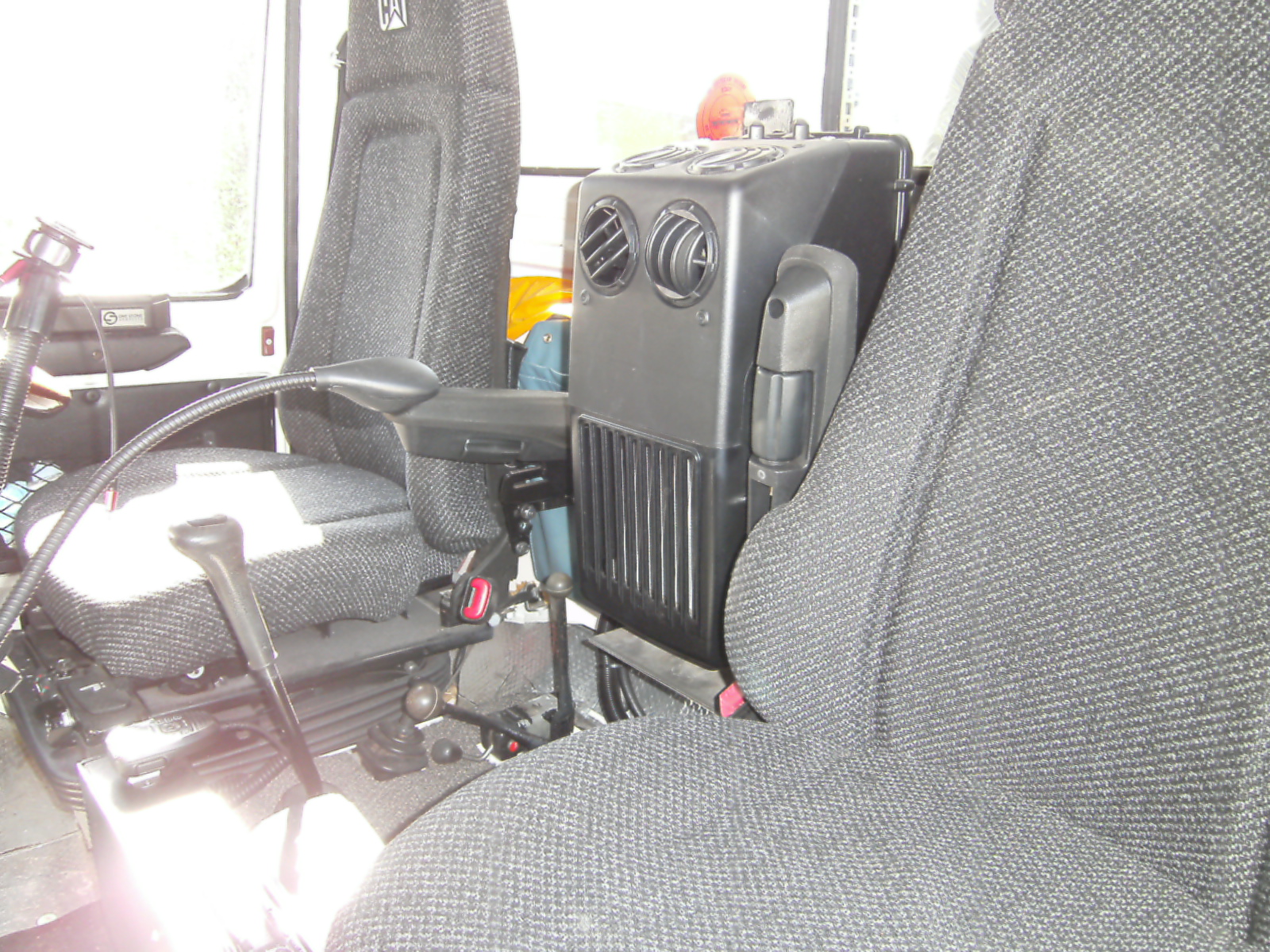
I've gone for cooling only (not reverse cycle), because the vehicle already has a hot water heater system. Installing the compressor where I did, was a very complicated job.  The advantage of it here (rather than just above the bash plate) is that it will not get totally immersed when river crossing. Unfortunately, my design to locate the evaporator at the front of the cabin (under the centre of the front dash console) was flawed because the gear shift lever hit it, so it is now located on the rear wall of the cabin between the seats. I fitted a heavy duty system to cater for the hot outback, I selected (however, I over did it (as usual), and its too cold even for the hottest day):

  • wall mounted Red Dot Evaporator R6840024P
  • roof mounted Red Dot Condenser (needs to be small so as not to foul the roof hatch) R6160024P
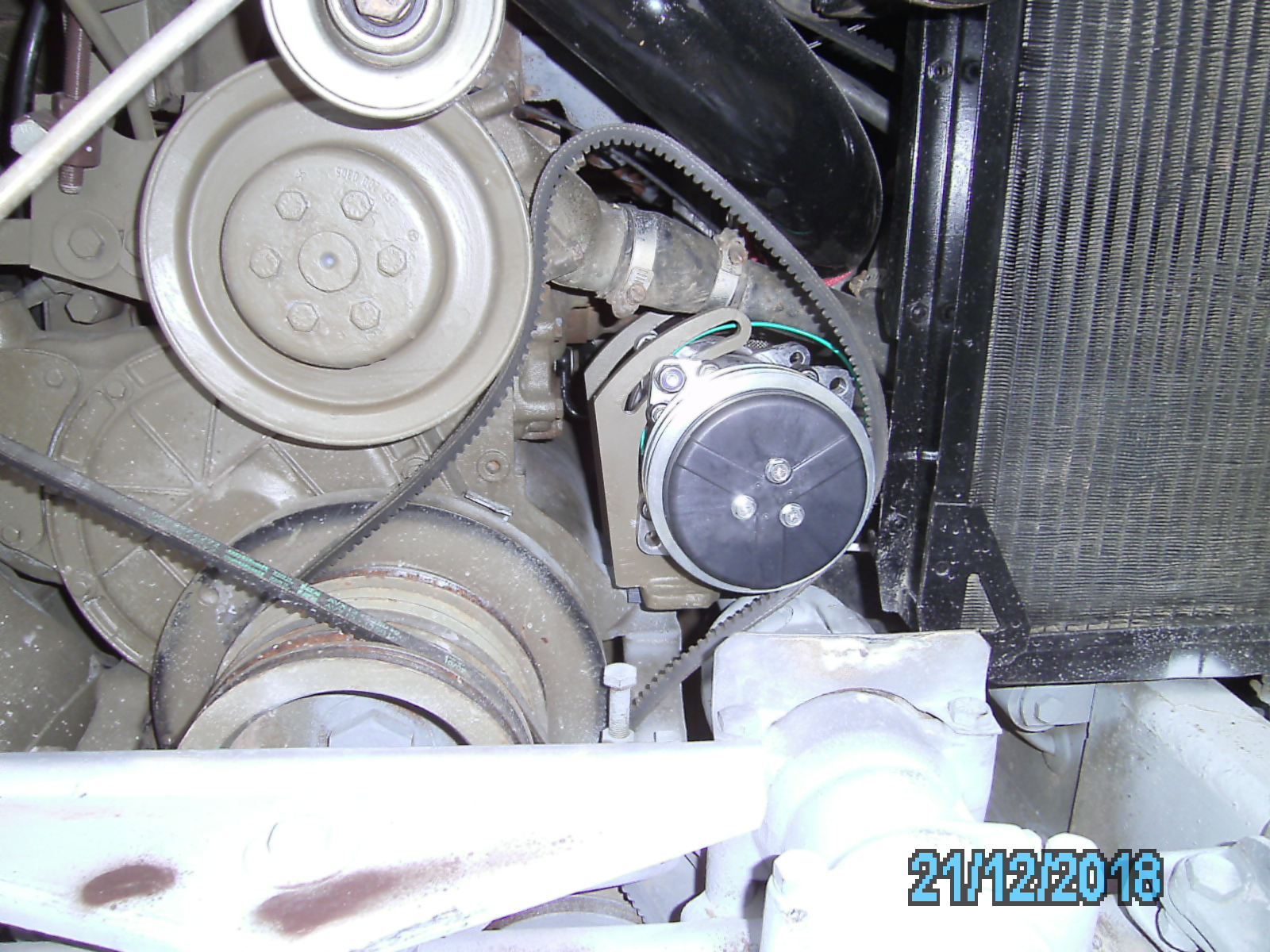
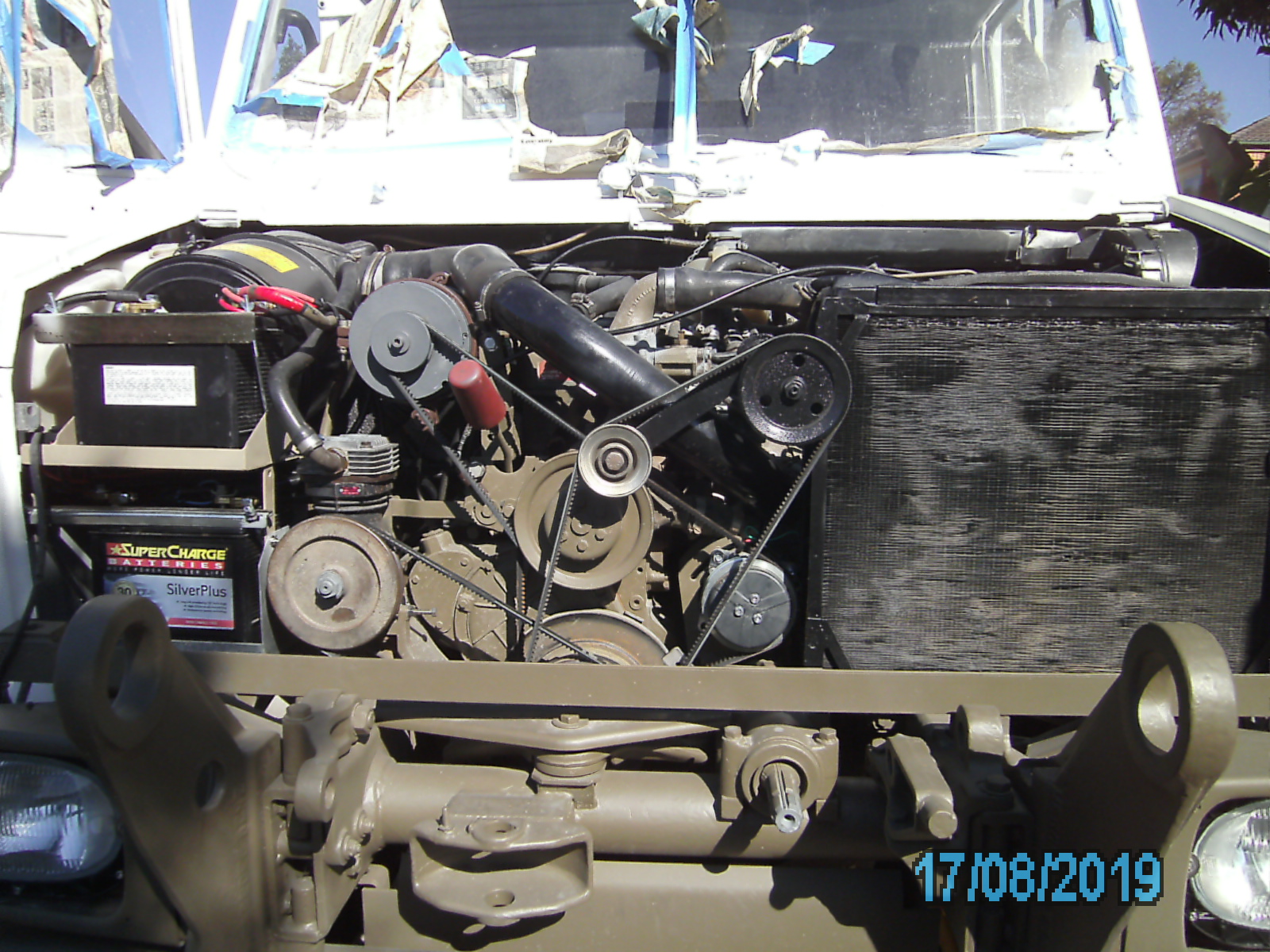
  • Sanden 9 piston Compressor (located in front of the turbo in place of the fan belt idler tensioner pulley)

I bought the bits all from different companies across the US for the best prices. The risk in doing this, is no warranty. One can install an all-in-one roof top unit (electric driven compressor), but as the roof is ribbed, cutting out a large hole for the air flow will increase the risk of  water ingress unless a water dam is welded around the hole. Some people remove the roof and weld in a flat panel, so that they can install an all-electric unit. I have decided its inefficient to change mechanical to electrical back to mechanical, so for me, its a mechanical compressor direct off the crank (via vee-belt) rather than an all electric arrangement on the roof, plus I did not want to chop up the roof after I had painted and fitted out the cabin (generally need to strip everything out in order to safely weld the roof)..

The most difficult part was making up a heavy duty adjustable mounting bracket to suit the compressor. Very tight fit. I discovered that the belt touched the power take-off shaft, so I had added a small 40mm (VW) idler pulley to push it away. Lots of ad-hoc bespoke mods needed to get it right.  Its July 2019, electrics done and hoses are now run and holding vacuum. It's end of 2019, system now charged and working great.

Note: Unidan has a complete air conditioning kit available and their evaporator unit fits very nicely under the centre of the front dash console. Its priced quite reasonably, as I soon found out that buying my own parts ended up costing me just as much or more, (due to import freight costs). If I had my time around I would probably just buy Dans kit, but you live and learn. My system does however allow me to keep the floor space in the middle of the cabin clear, for the dog to rest and to easily step from one side of the cab to the other.

Exhaust & Air Inlet

Turbo:

 I replaced the turbo (just in case it had some unknown defect and for some peace of mind) for a rebuilt unit. Last thing you want is turbo blades fragmenting. I found that MTA, Denco Diesel and Unidan prices are all about the same, at about A$1k exchange.

It was a nightmare to get it off and a nightmare to fit it up again. Took 1/2 a day to get the old one off and a bit of time to put the new one back. No way of getting a torque wrench in there, so hopefully nuts are done up right. The coating I used on the rusty cast iron parts, is an industrial grade heavy zinc paint (very cheap and works fine). I have tested it for about 5 years on my Land Rovers exhaust manifold and it has held up fine. Much cheaper than ceramic coating, but for me its simply about a tidy look (I don't like surface rust, even though its not structural). 

Rather than drill the turbo or the exhaust manifold, to fit the exhaust gas temperature probe, I drilled and tapped the exhaust casting after the turbo. There is a flat spot on the casting perfect for this (see first photo with the fitting in place).

Before starting up the engine with the new turbo, make sure that there is oil in it. Check with suppliers recommendations.

I did the following: 

  • Changed engine oil and filters,
  • Put catch bowl under turbo drain,
  • Before fitting oil inlet pressure pipe, fill top with new oil (should drip out the bottom),
  • Fit oil inlet pressure line (with new gasket and copper washers),
  • Start engine at idle (do not rev) turn off after about 5 seconds,
  • Check oil is coming out of turbo drain,
  • Fit drain fitting with new gasket and drain hose,
  • Start engine at idle (do not rev). Leave to run and inspect for any leaks,
  • then hope for the best.

Exhaust Pipe.

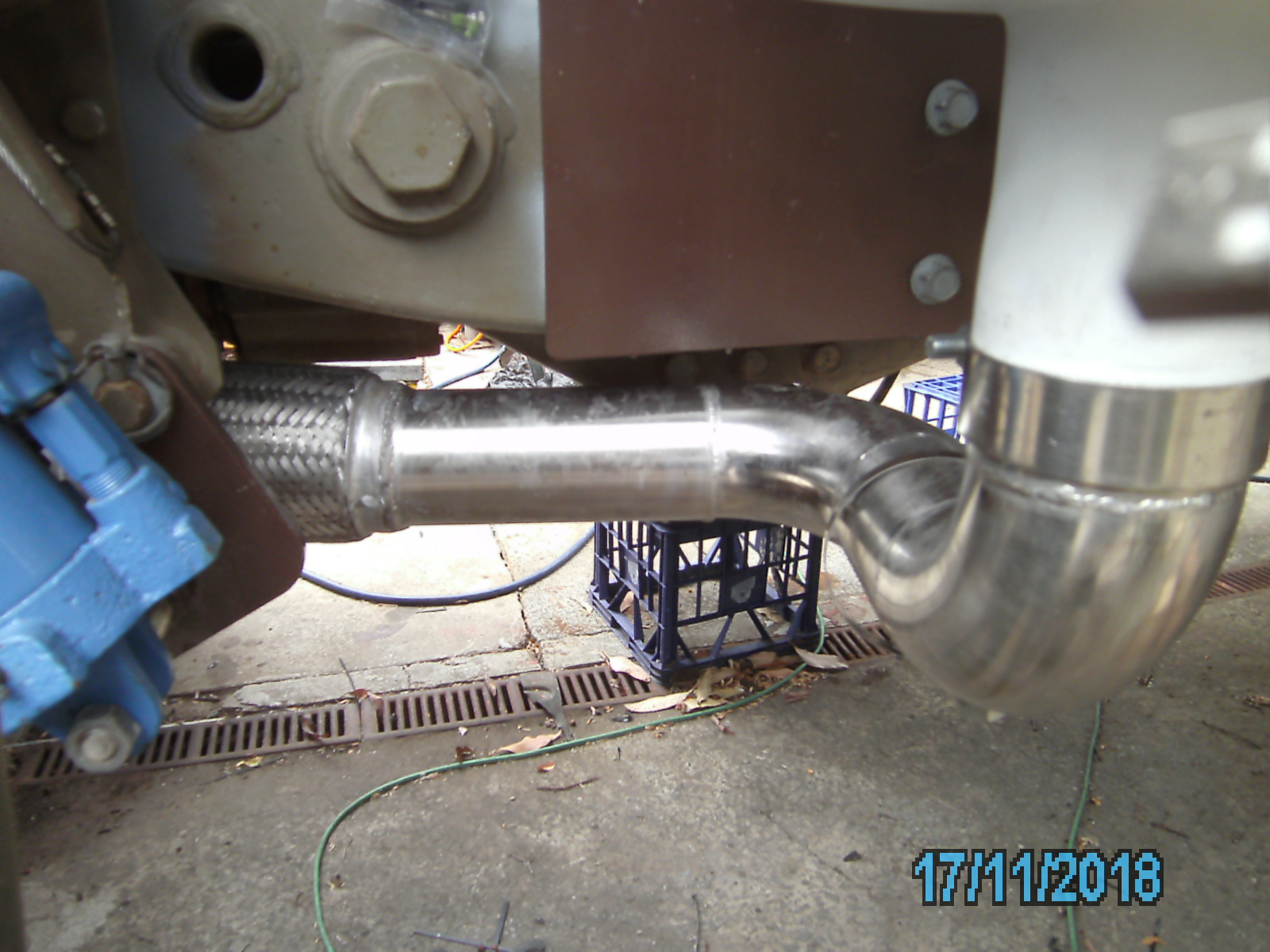
I installed 3.5" pipe. I could not easily get all parts in 316, so used 304 for some of it. 

It is bad enough trying to fit 3.5" up to the turbo, but it would be almost impossible to fit 4" (and 4" is overkill anyway) following the same route as the original exhaust. You might want to try to follow the original route otherwise it could be exposed to damage. 

The elbows I used are thick wall 316 sanitary fittings (used in nuclear reactor laboratories etc), and a much thicker material than normally used for exhaust pipes.  I marked everything by eye and cut angles by eye using a 14" drop saw. Note: A 14" saw is only just going to be able to cut all the way through (in one cut) when the blade is new. So to cut 4" pipe, you may need a 16" friction saw. The flange however, had to be made to my drawing and I fitted an adaptor (3" to 3.5") to it. The gasket is part A302490008001 from MB. 

Purging for TIG welding of stainless tube is essential otherwise oxide forms on the inside behind the welds. If purging is not done during welding, this oxide is a source of later corrosion, weakness and breaks up the gas flow (plus large dags which impede the gas flow). This was my first time working with thin wall stainless. Not easy to ensure perfect flush butt tack welds. Every segment needed the section to be bolted back up to mark for welding and for cuts/angles, and taken off again.  A big job, as it took a lot more than one day just to do this simple task. 

I gave up trying to find a reasonable priced muffler anywhere. One option was to get one custom made in the USA, but this too would have been very expensive, with no guarantees of a decent dbA reduction. I had to bite the bullet and order a proper Cowl muffler in the end (a disk muffler would have been the best, but price was insane). It arrived from the US in October 2018. A stainless muffler was too expensive, so I ended up going for thick mild steel (it was still A$1000 just for the muffler !!) and painted it with white high temperature ceramic paint. Should last my lifetime (hopefully). Added my own mounting bracket (as the standard bracket is about A$250). Unfortunately the lowest item hanging down is the exhaust pipe under the muffler and its what is likely to get wiped out first on a rock. Probably not the best of designs but I'll see how it goes and modify it later if needed. Added a drain at the lowest point in case water gets in. Though I noticed that most Unimogs have exhausts much lower and more exposed, so I don't feel so bad .

Full welding of the stainless was done by Beauchamp Metals here in Sydney Taren Point. Great job and reasonable price. Can't recommend them enough.

After all installed, and vehicle lowered to the ground, I realised I made a mistake. The section of exhaust after the turbo outlet casting) where it comes down from the engine compartment, has insufficient clearance from the front torque tube wheel strut connection. The torque tube is likely to come up and hit the exhaust when I go over a bump and the suspension bottoms out. The end result might be ripping the turbo off the exhaust manifold and ensuing engine destruction (as bits of metal get sucked into it). Its now June 2020, and I have pulled it all out and chopped it up to re-make it (again). Not a small task with the cab not raised.  The yellow line below shows the path the tube should have taken. Its back in, and better, but clearances still not perfect, as now the sway bar might hit it with extremes in suspension positions.

Intercooler

Fitted the Unidan Kit. Last picture shows the cut out required in the lower part of the grill to accommodate the radiator. A fair bit of work in trial and error cutting enough out of the grill so as not to rub on the intercooler, but not too much.  

Exhaust Stack

Quite a bit of work in building fully stainless steel exhaust stack and sourcing value for money parts.

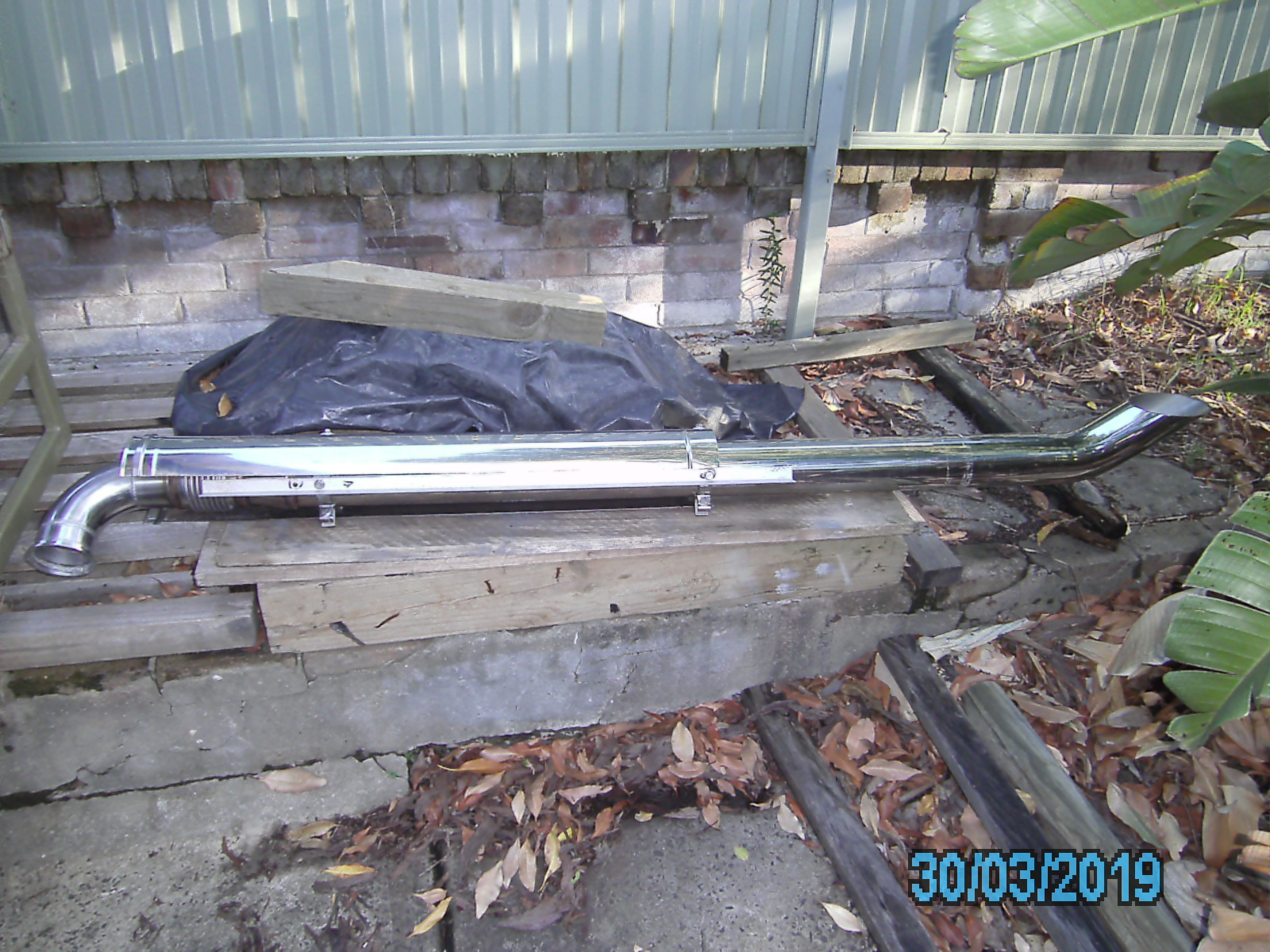
Dec 2018. Decided that I needed to exhaust thesmoke up and away, so I changed the arrangement from a low level outlet pointing downwards, to a smoke stack. I went for 4" polished stainless steel (4" is an odd size and difficult to find). The heat shield to suit 4" pipe is almost impossible to find (as exhaust stack pipe normally starts at 5"). I made my own by slicing up a wood heater flue heat shield from Bunnings. Tacked the exhaust stack into place, in order to make up the supporting frame at rear of cab. A frame from the chassis (NOT from the tray and NOT from the cab) is required to support the weight.

In order to allow flex between chassis and engine, a bellows fitting was required at the inlet to the muffler and on the outlet of the muffler. Time will tell if there is enough flex in the system. 

Fuel Pump Settings

Minor horsepower increase is possible by adjustment to the Bosch mechanical fuel pump.

Linden Martin has provided useful details in Unimog Owners NSW Facebook site, on how to Un-Billycart an Ex ADF Mog Parts 1 and 2 (basically over-fueling).

I purchased a dozen used spare fuel injectors (to be sure to be sure). I'm hoping that they only need a clean, spray pattern and pop off pressure check, if I need to replace the existing ones at any stage.

Air Horns

I fitted some 82 class locomotive air horns underneath out of sight (no point buying a fancy chrome set just because they look nice). But I dropped one, deformed the bell and hairline cracks in the bell. So I thought, why not solder them up using the TIG. Set the TIG to pulse and lowest setting of 1 Amp to try lead soldering. Blew a large hole in it!!. Back to the simple traditional electric soldering iron to repair it. Hours of work. They still look battered but they work ok. Goes to show you that its trial and error when you are learning-as-you-go (I should have tried on a piece of paper thin brass sheet beforehand, but I'm impatient). These horns have the advantage of being robust and able to handle higher air pressure than most. They also tend to be loud. I have them set up with a large bore solenoid (and isolation switch). If I quickly toot the normal electric horn only the electric horn makes a noise. If I hold down the button, everything comes on. This is because the electric horn responds very quickly, whereas the mass of the solenoid shuttle takes a little longer to move and for the air to compress at the air horn diaphragm. Hence by time I have removed my finger from the button for a quick toot, not enough air reaches the air horns to make a noise. If you are worried about it, install a delay timer to ensure that there is a distinct delay between the electric horn and air horns.

Air Pre-Cleaners

I originally ordered two Enginaire style aluminium air cleaners, but got ripped off by a fake company. They never arrived. I ended up purchasing two TopSpin plastic style. They are not as strong as metal but have the big advantage of being lighter. All worked out for the better in the end (God works in mysterious ways ). It's unlikely that the cab air inlet snorkel pre-cleaner will be able to do much due to the much slower air speed, but its one way of carrying around a spare, just in case the engine inlet pre-cleaner gets knocked off on a low branch. These sort of pre-filters only come into their own in very dusty locations such as bull dust on outback roads, and the maker claims something like 90% dust extraction. This means that the main filter should last much longer. The Topspin needs a collar adaptor ring to make it fit to the standard ADF style snorkel. I used 5" PVC sewer pipe cut offs. Also, as the clamps alone may not be sufficient to hold the pre-cleaners in place, I also drilled and fitted screws through each collar.

Tool Boxes,Handwash Water & Grey Water Tanks

I designed the (located front of rear wheel) heavy duty tool boxes mid July 2019. They were beautifully made (4mm marine aluminium), by Beauchamp Metals. Added a couple of rear water tanks (shown in black before painting)and a 300L poly tank inside the large white storage box.

Battery Trays

A friend here in Sydney with a couple of Unimogs, gave me the idea of putting both batteries under the bonnet in front of the air filter.

The advantage is that it means I can get rid of the existing ADF style battery box and fit my fuel tanks. The disadvantage however of this mounting arrangement, is that the batteries have to be prior removed before the air filter can be changed or the cab tilted. But as the generator and other connections need to be removed to tilt the cab anyway, a few more items does not make too much difference, well maybe? but its done now. I figure that the main air filter should not need changing too often especially as I have a pre-filter installed on the top of the snorkel (which the maker claims should pull out about 90% of dust when used at speed).

Maintenance Manuals

There are three main sources that I use:

1) Under the ADF  freedom of information act, I applied to obtain various maintenance information of the ADF, which they agreed, but rather than just provide it directto me (and I disseminate it), they arranged for AFM to make available the information on their web site.  Its likely a good idea to download copies of manuals etc, in case their site closes one day. 

2) Workshop Manual and Parts List. I use the free VM-Ware Player (virtual Windows XP Workstation) to run the applications. I purchased the following applications from 'emanualonline':

- Mercedes_2014_WSM (workshop manual) and

- Mercedes_2014_EPC (electronic parts catalogue).

Note that these two applications can be quite difficult to use. You will need to plug in your VIN i.e. WDB435  ...................... . After that you can select the category you are interested in. Unfortunately not all parts for the ADF Unimog versions are listed, but the far majority of standard parts are there.

3) Internet Forums:

  • Mercedes Benz Forum

Canvas Covers

Found a good local upholsterer, who has the correct 'olive drab'military colour canvas. He made my mast light cover and air conditioner cover  at the right price.  I do recommend A L S Upholstery at 436 The Boulevarde, Kirrawee NSW 2232, Australia.

If the main canvas cover over the rear tray has tears and small holes in it, you may want to repair it. It's a poly something-or-other weave, with vinyl coating both sides. Its normally thermally welded, using heated implements. The cheapest way is to chemically glue repair patches to the inside (where they cannot be seen). You will need to take the tarp off the truck. You will need to clean around the area to be repaired (and the patch), apply primer solvent to both surfaces and then quickly apply the glue solvent to both surfaces. You need a hand roller and heavy objects to place over the patch to apply pressure until it has set a day later. Do this on a warm day.

You will want to use proper heavy duty patch material (hard to find). This I found is available from above ground pool repair suppliers or even better,where they make truck side tarp curtains (the ones which often have printed advertising material on them). I got (free) off-cuts. This solvent method is not as strong as the thermal weld, but it is good enough for me for patch work.

Crane for spare wheel

I needed a small crane to lift the spare wheel up and down from the back of the tray. I looked at a lot of cheap Chinese and local model cranes on ebay etc. All were heavy. The only light-weight version I could find was the Spitz-Lift, but expensive compared to some other heavy steel versions. Picture below shows my testing it on the spare wheel. Its installed on the back tray temporarily. Whilst it is expensive, this brand/model is so lightweight, one person can carry it folded up. If you wanted to get carried away, you could buy 4 side mount sockets and mount one in each corner of the tray.

I was carting around one of the steel wheels as the spare (at least for a while).  However, the steel wheel has a ~10mm thick rim and the vehicle is now set up with studs that suit the thicker alloy rim material (20mm).  I would also need to fit spacers to allow the steel rim to fit the vehicle. Was a waste of time.

A negative issue with using the odd steel wheel as a spare, is that its apparently not legal to drive with odd wheels on the front. I would need to carry 2 spares to ensure that both front are the same. Testing of the crane on the steel wheel shown below at rear of tray (temporary position for test). Is fine for the lighter steel wheel. I eventually purchased an alloy spare wheel.  The Spitz-Lift had trouble lifting it and the post was flexing. It's not quite strong enough for these wheels with run flats, so I strengthened the crane by installing a steel inner tube in the cranes vertical tube.

STAGE 1: Fit the plastic extenders:

The top step (both sides) has to be moved rearwards by at least 50mm. This is achieved by fitting new nutserts into the cab body. Note that in my case, the passenger side cannot be moved rearwards by fully 50mm, but I managed to insert new nutserts at 35mm. To make up for the extra 15mm shortfall (only on the passenger side), I added a bit to the top step bracket and then drilled two new holes in the side plate, 15mm further forward. This achieved the required 50mm offset.

The two existing guard brackets (1 each side) were recovered from the portion of steel cut cut off the main guard, using a cold chisel, (as they are only spot welded on). I drilled them with 4 holes to match the 4 holes already in the plastic extender guards and fixed them to the new plastic extenders with four M6 screws. The photo below is not my vehicle, but this is what the extender looks like fitted. Note that the mud flap is angled rearwards to clear the tyre.

Front Mudguards

I discovered the hard way, that the larger tyres on the Hutchinson rims with Michelin 395/85R20 XZL rub on both the front mud flaps as well as the rear trailing edge of the steel front mudguards, at full lock when traversing undulations. The right tyre rubs on right lock, and the left tyre rubs on left lock.  If I had know about this beforehand, I would likely have had the last 1/3 of the guards re-rolled such that the rear 1/3 is at a larger diameter so that the trailing edge would be a further 50mm rearward.

It's August 2024, I getting sick of the rubbing at full lock when passing over undulations. I have decided to bite the bullet and alter the mud guards. The U4000 utilises plastic extenders which flare out, providing a small amount of extra space between the guard and the tyre. I purchased a pair and proceeded to install. This involves some work, where the rear of the metal guard has to be cut off and re-drilled etc.

Mercedes Benz part numbers (as I understand):

  • Right hand A4258813601  (also A4258811201)
  • Left Hand A425 881 3501 (also A4258811101)
Not my Vehicle - This is what it should look like.

STAGE 2: 

As can be observed from the last photo above, my heavy duty mud flap was originally hanging down vertical and even after the installation of the plastic extenders, it still hung down vertical (partly due to my using soft mud flaps). However the main problem in my case, is caused by retaining the standard U1700 metal guards, as they make it difficult for the plastic extender to be tucked forward enough. The red circled gap (last photo above) should (ideally) not be there, and the extender guard should have been located further forward. Lesson Learnt: For the reader: Replace the metal guard, with the wider U4000 version. 

As can be seen from the series of photos below, there is only about 20mm (if that), clearance on flat ground.

STAGE 3: Deflect the mudflaps rearward:

I added a stiffening plate on the inside, this did the job, and it deflects the bottom of the plastic extender further rearwards which in turn, deflects the mudflap backwards enough. Note: This deflector plate is only necessary because I utilised the standard U1700 fenders. If using the U4000 wide fenders, it would all go together without the hassles I experienced. A completekit is available.

Towing

There are strict procedures for breakdown towing. For the ex ADF U1700, if towing by raising the front (with the rear end on the road), part of the gearbox will be spinning and it needs lubrication. Apparently the gearbox mechanical oil pump cannot work with the gearbox in neutral (its driven by the input shaft) . Therefore, I am advised by forum members that the gearbox will need to be in gear whilst towing. However, for the gearbox to be in forward or reverse, the engine will need to be disconnected from the gearbox, otherwise the engine will be spun via the driveshaft (risking damage to the engine and cause a dragging load on the tow vehicle). Apparently if towing forward, then the gear lever must be in forward. If towing backwards the gearlever must be in reverse (so that the oil pump rotates in the right direction).

The vehicle can only be towed (by raising one end) for up to 1km (with a speed restriction) without first removing/disconnecting the drive shaft (between clutch and gearbox). Despite what some diehards may believe, its a bugger of a job to undo the driveshaft (and fix it up out of the way), allow an hour for cussing to do this, assuming you have all the right tools. You will likely have  to grind down the outer diameter of a ring spanner for this (so best to carry this modified spanner).  Refer to the specific requirements and restrictions for your vehicle before towing. On my vehicle, only the gearbox end need be disconnected providing that one can safely tie the loose end of the driveshaft up out of the way (maybe take some coat-hanger wire with you to do this). The driveshaft cover (M8 bolts) needs first removing in order to get to the gearbox end of the driveshaft flange. Some forum members claim that the tow truck drivers usually do this disconnection for you, but I'd make sure you can do it. If you cannot safely tow by lifting one end, a low loader may be required. Note: There are restrictions on overall height when the mog is on the rear of a low loader/tray, as well as time of day and route permits sometimes required.

Roof Lining

Roof lining board was warped, broken into pieces and badly water damaged. I had to rejoin sections using glass fibre and resin, replace a panel and rivet it all together. I sealed the particle board with paint then had an upholsterer replace the fabric. Purchased a new ceiling light from England (best price). Its at least a 2 person job to install safely due to fragility.

Rear Tray Replacement Decking

The cargo style has a plywood tray, with the last 1/3 covered with aluminium checkerplate. Its highly likely that there will be portions rotted on most vehicles of this vintage. I found quite a few rot patches under the aluminium, and around the shipping container pins.  I had previously cut the rot out, except for that under the checkerplate. Where the plywood sits on the headboard tray wall (3rd photo) water is trapped, and there was rust starting. Luckily I was able to catch it in time.

OPTIONS:

FRP grating: Its March 2023, and on a whim, I've removed the camper module and removed the timber tray, planning to replace with FRP grating.  6th photo shows the larger of the two ply sheets (back sheet) 'popped' from underneath using a jack. I then cut it up into more manageable pieces (as its heavy). The advantages of the FRP grating is that I can inspect the frame of the tray for rust, it does not need to be sealed in place and can be unbolted and removed when needed, its very durable, very strong and it lets most of the water though (so it does not pond) and I can inspect things easier. The disadvantages of the FRP is that its even heavier than the ply, it is not flush with the top of the tray frame (did not find any suppler that would do 19mm in the sheet sizes I needed) and the water will still be dammed over the metal supports in the middle of the tray, thus its not the ideal material.

Thermo-lite Board: I then looked at Thermo-lite Board, as it was recommended by Facebook forum members. Its expensive because the sheet sizes mean there is a fair bit of wastage and because it had to ship from Queensland. But its the perfect strong no-rot material and at 19mm thick, its the perfect replacement thickness. Last 3 photos show it fitted to front half of tray frame. I used countersink stainless steel M8 bolts to secure it (using same existing mounting holes). CAUTION: Its packed with glass fibre, and you will need to wear a dusk mask against the dust when cutting/drilling it. The dust is very electrostatic, and will stick to everything in sight (including your clothes, your lungs and skin).

Engine Belts (AVX13 Notched Vee belt)

The below length belts are for my ADF Unimog. If you change for example: generator to alternator or add air conditioning compressor etc, then belts will be different. I have tried many different lengths, and here is what I ended up with: 

  • Air Pump 1335
  • Steering Pump 950
  • Fan Spindle Drive 1625
  • Water Pump 1360
  • Generator 1125
  • Radiator Fan 1125 

Some good brands are: Optibelt (Marathon X) and Gates (Green Stripe). Note that I have fitted some shorter than standard belts, in order to reduce belt slap and whilst difficult to get them on, they allow some decent tension to be achieved.

Swivel Table for Camper

Found that the most roust table support is the Lagun Leg ($340) where a swivel arrangement is required. Then initially had a custom stone table top made to suit it (~$400). Arrived chipped and was far too heavy at 26kg for the Lagun table support system which uses plastic swivel points. Had to scrap that idea. Then looked at marine timber tables. All too expensive. The cost effective answer was facing me all along. Buy an over-bed disability table as used in nursing homes. Cut an aluminium plate and weld a 1" shaft to it. Removed the table top from the over bed frame, discarded the frame. A waste, but the cheapest solution at about $120. One can buy just the table tops in the USA, but not in Australia. 

Cabin Mounts & Suspension

I was having oscillation problems initiated by undulations in the road at certain speeds. Suggestions ranged from torque tube issues, to gearbox, to clutch, to water in the tyres, to out of balance tyres, to run flats, to shock absorbers, to tyre pressures to ..............

Cabin Mounts: After much FaceBook and BenzWorld forum discussions, I found that a lot of other people have had similar issues, but no answers. Ben Nash from MogCentral, mentioned a similar problem that he has diagnosed in the past: Worn cab mounts allowing the cabin to bounce and thus affect the accelerator linkages which are fixed to the cabin, thus starting an out of control oscillation with engine speed going up and down as the cab moves up and down. So I raised the cabin and inspected the rubber cab mounts. The rear looked fine but I was unsure about the front. I started to undo them (10mm) but someone had used thread locker and they were also rusted in. On each side, 3 of the 4 came out over a few days work, the 4 th nut broke loose inside the floor box section (the 4 nuts are welded captive inside the floor box section and not accessible). So I cut off the failed nut/bolt on each side. I was going to try a nutsert to remediate it, but not enough depth, so I glued a large triangle shaped nut inside that cannot rotate. Not ideal but should do the job ok.

Once I got the mounts out, there was lots of rust powder inside because nowhere for water to escape to. Nothing serious but the entire inside of the box section seems never to have been painted so I treated it all with fish oil inside (as I hope never to go there again). Note: I also treat all bolt threads with anti-seize before I insert them, just in case someone needs to access them again. 

Had to clean the threads out with a tap, as they were full of rust and thread locker.

I got the pitch wrong the first time I ordered the replacement M10 x 35mm bolts. They are 1.5 but I ordered fine (1.25 by mistake).


The above photo shows where the rubber had come away from the metal. Both sides of both mounts were like this.

Shock Absorbers: I  replaced the old shock absorbers with 'Iron Man' from Mog Central over my 2021 Christmas break. Most of the 20mm bolts were a nightmare to remove after probably30 odd years. Last picture further below shows one where the bolt/nut was so tight even a 1m bar would not budge it. I had to split the nut by combination of grinder and cold chisel / lump hammer. The rear upper bolts needed a lump hammer to bash them out over many hours. The bolts had corroded slightly thus making them hard to shift. Hint, I found that using a G clamp to squeeze the two webs together slightly made it easier to remove the bolts.  Exhausting work. I ordered replacement class 8.8 bolts with 30mm head from various places on the internet. No one company had the three different lengths. The Army mechanics had waaaay over torques the bolts/nuts (surprise surprise). In fact, the ADF manual states 400Nm. I am of the opinion that this is unnecessarily tight. The shock absorber manufacturer will advise on the bolt torque (which in my case was less than 400Nm). 

A close up photo further below shows how the threaded profile of a bolt is typically worn down in the middle (see middle photo below) from the many miles of hammering from the shockies. Best to replace all bolts at the same time. I found every bolt, bar two (which were newer than the rest), had this wear deformation.

When installing the new shocks, it was almost as hard a job. The upper mount and the lower mounts can be out of alignment slightly, requiring some forceful measures to get the upper and lower bolts in. Make sure the new bolts are of the right length. I had to cut one down as it was 1/2" too long and fouled.

If you have a 'helper' available, I recommend it. It took me at least 8 times as long as it would have taken with 2 people, as the shocks are heavy and the bolts can be very stubborn.

Fan Spindle belt tensioner

The belt tensioner was weak. As its a bit of a job to pull out the spindle and change the rubber tensioner bush, so I decided to also replace the bearings at the same time.  Bearings are quite common. I used SKF 62304-2RS1. The pulleys come off easy enough. Watch out for the small key in each end of the shaft, easy for them to fly out. The fan tensioner bush is very tight to remove or install. Need a strong press. The mob I first took it too, after a month trying said they cannot do it. I then took it to a proper engineering shop in Kirrawee, who did it essentially straight away. They had to machine up a cylinder with a step in it, to push the tensioner out and the new one in. Its a tricky job because the casting is not flat and parallel, so if this if not compensated for, you could end up trying to push the bush in at an odd angle. I have no idea why the bush is so tight, other owners have complained about the same issue. Before you push out the original bush, measure how far the cogged face protrudes out of the casting, so that when you push the new one in, it goes in exactly the same distance as previous. Replaced the idler pulley (shown with yellow cap) at the front also (it was making a slight noise).